
House Clearance Specialists · Derby & Derbyshire
Guide to House Clearance Derby
Licensed Waste Carrier CBDU538050
Fully insured on every job
20 years serving Derbyshire
Standing in a house full of someone else's belongings, or your own after twenty years in one place, is not a job you do often enough to know the shortcuts. This guide walks through what a house clearance in Derby actually involves, what you can sensibly do yourself before anyone arrives, and where it makes more sense to hand the whole thing over. It draws on how a working clearance actually runs on the day, not just a checklist copied from somewhere else.
Derby House Clearance Services has been doing this work across the city and the wider county for twenty years, family-run from the start under Michael, and most of what comes through the door still arrives by word of mouth rather than advertising. You can see the full range of what gets cleared, from single-room jobs to whole estates, on the main Derby House Clearance Services site, and the rest of this page covers the parts people ask about most: what's included, roughly what it costs, and how the day itself unfolds.
At a Glance
- Free, fixed-price quotes from photos, video or a site visit
- Payment only taken once you're happy with the finished job
- Licensed Waste Carrier (CBDU538050) with resale value offset against your price

What's inside the quote, and what's charged separately
- Full property clearances - every room, loft, garage, shed and outbuilding, cleared and swept out
- Part clearances - a single room, a garage, a loft, or just the large furniture you can't move yourself
- Probate and estate clearances, including sorting through decades of accumulated belongings sympathetically
- Wardrobes, sideboards, dressing tables, beds, sofas and other bulky furniture
- Fridges, freezers, washing machines and other white goods and appliances
- Bric-a-brac, kitchenware, bedding, clothing, children's toys and general household contents
- Garden, patio and driveway items left outside for collection
- Rubbish removal and general household waste alongside the main clearance
- A valuation and purchase offer on valuable furniture, antiques and collectables found during the job
- Secure destruction of personal paperwork and documents uncovered during the clearance
- Key collection from a solicitor or agent, and photos sent afterwards, if you can't be on site
Not Included / Costed Separately
- Hazardous materials such as asbestos, gas bottles, chemicals or certain paints, which need specialist licensed disposal outside a standard clearance
- Building waste and rubble from renovation or demolition work, which is priced and handled differently to household contents
- Structural work - ripping out fitted kitchens or bathrooms is a strip-out job, not a clearance, though the resulting waste can be taken away
- Items you haven't yet decided to keep - anything still uncertain on the day usually gets left rather than guessed on
- An exact price without a look at the job - a phone estimate is a starting point, not the final figure, until photos, video or a visit confirm the volume
From the first phone call to the swept-out finish
- Tell them what you need: Call or message with a rough picture of the job - a full house, a single room, a garage, a deceased relative's estate - and get advice on the best way to approach it before anything is booked in.
- Get a free, fixed-price quote: For straightforward jobs, photos or a short video sent over WhatsApp or email is often enough for an accurate estimate. Larger or more complicated properties get an actual site visit, so the price you're given is the price you pay, not a number that creeps up on the day.
- Do the easy prep yourself, if you want to: Sorting into rough piles - keep, tip, charity, recycle - before the team arrives isn't required, but it does cut down on-site time and can bring the price down, since less sorting on the day means less labour.
- Clearance day: The team arrives at the agreed time, works through the property systematically, and separates items for reuse, resale, donation or recycling as they go rather than throwing everything into one load. Heavy and awkward items, wardrobes down narrow stairs, appliances out of tight kitchens, are handled as part of the job, not billed as extras once they're already agreed.
- Sweep up and sign off: Once the property is clear, it gets swept out before anyone leaves. If you're not on site, photos of the finished job are sent so you can see it's done before payment is asked for - nothing is taken upfront.
Working out a fair price before anyone visits
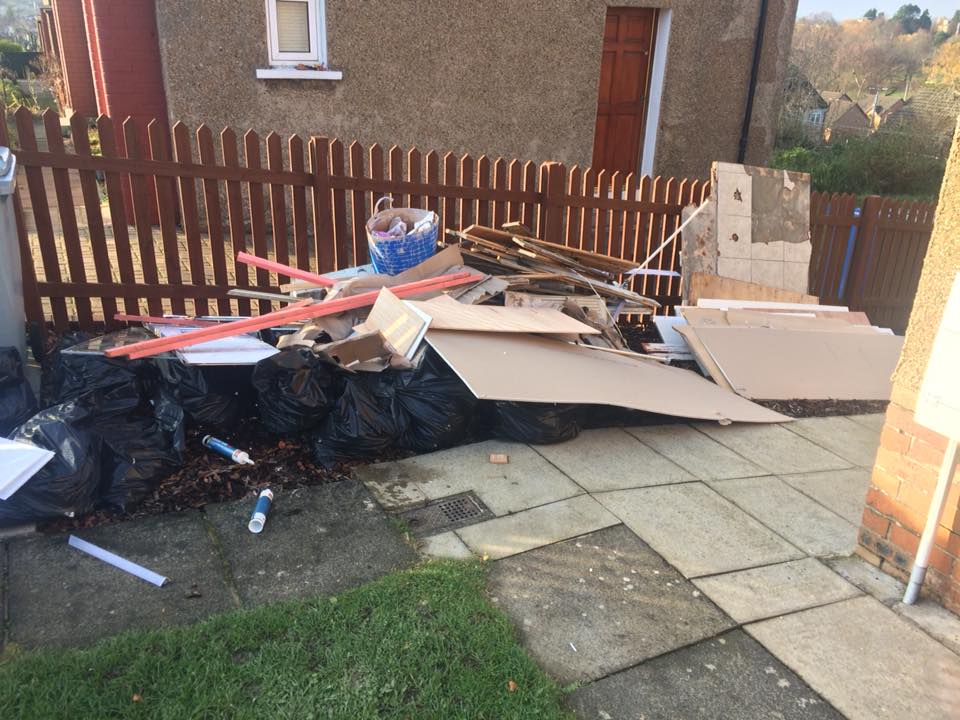
Cost is driven mostly by volume and weight, not by how many rooms a property has on paper. As a rough guide from national industry pricing data, a small load of up to around 250kg starts from about £175, a medium load up to around 750kg from about £400, and a large load of 1,000kg or more from around £595, with the UK average house clearance sitting near £450.
A typical three-bedroom house with a fuller-than-average amount of furniture and belongings more often lands somewhere between £750 and £1,100 plus VAT once everything is accounted for.
Those figures are a starting point for budgeting, not a quote - the only way to get an accurate, fixed price for your own property is a set of photos, a short video, or a site visit, because two three-bedroom houses can differ enormously depending on how full they are, whether there's a loft or garage to include, and how much access matters, since a top-floor flat with no lift takes longer than a bungalow with a drive right to the door. Where furniture, antiques or collectables with resale value turn up during the job, that value gets factored into the final price rather than pocketed separately, which is often what brings a quote down from the estimate. Everything reusable is separated for donation or resale rather than binned outright, so you're not paying tip fees on items that still have life left in them.
Skip hire, a DIY tip run, or a clearance team: the real trade-offs
| Approach | Typical cost | Your time and effort | Where items end up | Permits and access |
|---|---|---|---|---|
| Do it yourself | Fuel, tip fees and your own time, often underestimated | High - sorting, loading and multiple tip runs | Mostly landfill unless you sort it yourself first | Council permit often required for van or trailer tip visits |
| Skip hire | Roughly £200-£400+ for a week's hire, plus a permit if it sits on the road | Medium - you still load it yourself | Everything goes in one skip, rarely separated for reuse | Council permit needed for road placement; a driveway avoids this |
| Professional clearance | £175-£1,500+ depending on volume, fixed after a quote | Low - the team does the sorting, lifting and loading | Reusable items donated or resold; only the rest goes to licensed recycling | No permits needed - access and logistics are handled as part of the job |
A licence, an insurance policy, and two decades of repeat calls
Derby House Clearance Services has been trading for twenty years, started by Michael and still run as a family business, and most of what comes through the door now is booked by people who've used the service before or were told about it by someone who did, rather than found through advertising. That matters most in a trade where a lot of the work happens inside somebody's home during a hard week, whether that's downsizing, a house sale, or clearing a relative's estate through probate.
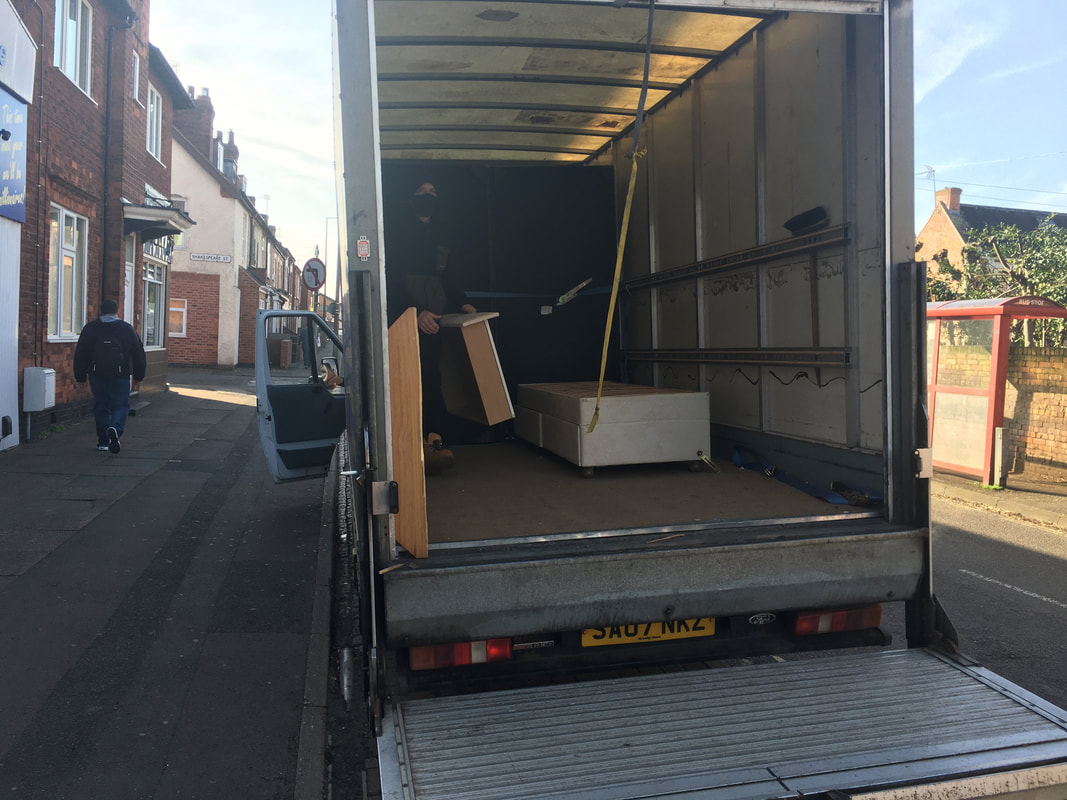
Personal paperwork turned up during a clearance is destroyed securely rather than left loose, and the pace on site is set by what the property actually needs, not by a fixed slot in a diary.
The business holds a Waste Carrier's Licence (reference CBDU538050) and carries full insurance for the clearance work it does, which is worth checking for with any company before you let them into your home - an unlicensed operator has no legal route for disposing of your waste properly, and an uninsured one leaves you exposed if something gets damaged on the day. On the environmental side, trained operatives separate everything at source as they clear a property: reusable furniture and appliances go to local charities or get resold, and only what genuinely can't be reused or recycled goes to licensed recycling centres across Derbyshire. That means you don't need to hire a skip, apply for a council permit, or make repeated tip runs in your own car - it's folded into the price of the job rather than left for you to sort out afterwards.
How far this guide - and the team - reaches beyond Derby
Derby is the base and the bulk of the work, from tight terraced streets and city-centre flats near the Cathedral Quarter, where narrow staircases and limited parking make access planning part of the job, out to the larger detached houses and bungalows in the suburbs where lofts, garages and gardens add to the volume. Beyond the city, coverage extends roughly 15 to 25 miles out, taking in Derbyshire towns including Belper, Ripley, Heanor, Ilkeston, Alfreton, Ashbourne and Matlock, plus Chesterfield, and reaching over the county line into Nottingham, Nottinghamshire and Burton on Trent.
Different areas bring different practical challenges to a clearance. Belper's older stone cottages sit on steep streets that call for careful vehicle access and often a bit more manual carrying than a flat driveway allows. Matlock has similar terrain issues, with narrow, steep roads and multi-storey traditional homes that make heavy-item handling slower work than it looks on paper. Ashbourne, sitting on the edge of the Peak District, has a fair number of older Georgian and stone-built properties where antique furniture and fittings turn up more often than average, which is where a proper valuation before disposal earns its keep. None of that changes the underlying process, get a quote, agree a price, get it cleared, but a fair quote does account for the property itself, not just its postcode.
Frequently Asked Questions
What does a full house clearance actually involve?
Every room gets cleared, along with the loft, garage, shed or any outbuildings you want included. Items are sorted as they're removed rather than thrown into one load - furniture and appliances in good condition go for donation or resale, valuables get set aside for a valuation, and the rest is taken to licensed recycling or disposal. The property is swept out at the end so it's left in a reasonable state, whether that's for a sale, a new tenant, or simply an empty house.
How long does a typical house clearance take?
A single room or garage can be done in under an hour. A full three-bedroom house with an average amount of furniture and belongings usually takes the best part of a day, sometimes less if it's already been sorted into piles beforehand. Heavily cluttered properties, large estates with outbuildings, or homes with difficult access (narrow stairs, no parking nearby, upper-floor flats) take longer, which is exactly why a quote based on photos or a visit is more reliable than a guess over the phone.
How is a house clearance priced - by weight, by room, or something else?
Pricing is mostly driven by volume and weight rather than a flat per-room rate, since two three-bedroom houses can hold very different amounts. A short list of large items (wardrobes, beds, white goods) plus a rough idea of rooms and outbuildings gets you close to an accurate estimate from photos alone; a site visit nails it down exactly. Any resale value in furniture or antiques found on the day gets set against the price rather than charged separately.
Do I need to be present during the clearance?
No. If you can't be there, keys can be collected from a solicitor or letting agent, and photos of the finished job are sent once it's done, before payment is taken. Plenty of customers do prefer to walk the property beforehand to confirm what's staying and what's going, then leave the team to get on with it - too much back-and-forth on the day tends to slow the work down rather than help it.
What happens to items that get donated or recycled?
Furniture and appliances in reasonable condition are separated out on site and go to local charities or are resold rather than binned. Whatever's left after that, items with no resale or donation value, goes to licensed recycling centres across Derbyshire, with landfill kept to a minimum. This sorting happens as part of the clearance itself, not as an optional extra, which is also why it isn't always the cheapest possible option compared with a straight skip-and-dump approach.
Can you clear a house with heavy hoarding or years of clutter?
Yes, and it's a job that calls for a different pace and a fair amount of patience rather than just extra labour. Hoarded properties are approached room by room, discreetly and without judgement, since it's often a family member or executor dealing with the situation rather than the person who lived there. Paperwork and personal documents found in the process are set aside and destroyed securely rather than left loose.
Are you insured in case something gets damaged during the clearance?
Yes, the work is covered by full insurance, alongside a Waste Carrier's Licence (reference CBDU538050) for the legal disposal of everything removed. Both are worth asking to see from any clearance company before you let them into a property, since an uninsured or unlicensed operator leaves you exposed if something goes wrong or waste ends up dumped illegally with your name attached to it.
How do you value antiques or collectables found unexpectedly during a clearance?
Items that look like they might have resale value, older furniture, collectables, anything that doesn't look like standard modern household contents, get set aside for a proper look rather than bundled in with the rest. Where there's genuine value, that gets offered back to you as a purchase, or the value is factored into a reduced clearance price. Nothing gets sold off quietly without that being part of the conversation with you first.
I've never handled a house clearance before - what's the first thing I should do as an executor?
Start by working out what genuinely needs to leave the property with you or the family, documents, photos, a small number of sentimental items, before anyone else gets involved, since that's much harder to sort out once a clearance is underway. After that, a call to talk through the property, room count, any outbuildings, roughly how full it is, gets you a workable estimate, and a site visit or set of photos turns that into a fixed price. You don't need probate fully granted before getting a quote, only before the clearance itself can usually go ahead, so it's worth asking early rather than waiting until the last minute.
Get Your Own Number Before You Decide Anything
A house clearance is easier to plan once you know roughly what it costs and what a day on site actually looks like, rather than guessing and hoping for the best. Send over a few photos or a short video, or book a site visit, and get a fixed price with nothing hidden in it and nothing taken upfront - payment only happens once you're happy the job's been done properly.
Phone: 01332-529220